
To keep pigeons on your balcony from becoming a recurring problem, remove accessible food, check sheltered nesting areas and assess suitable balcony bird proofing. Before installing netting or closing openings, check for occupied nests and confirm the approval requirements for your building.
Repeated droppings on outdoor furniture can make your balcony feel unusable. If cleaning and chasing birds away have achieved little, you need to understand why they keep choosing that space.
The right response depends on whether pigeons are briefly landing, resting regularly or nesting behind furniture. Start with those observations before buying another deterrent.
Why are pigeons attracted to your balcony?
A balcony can offer pigeons food, shelter and an undisturbed place to rest or nest. Even without deliberate feeding, its layout may provide a protected space they repeatedly use.
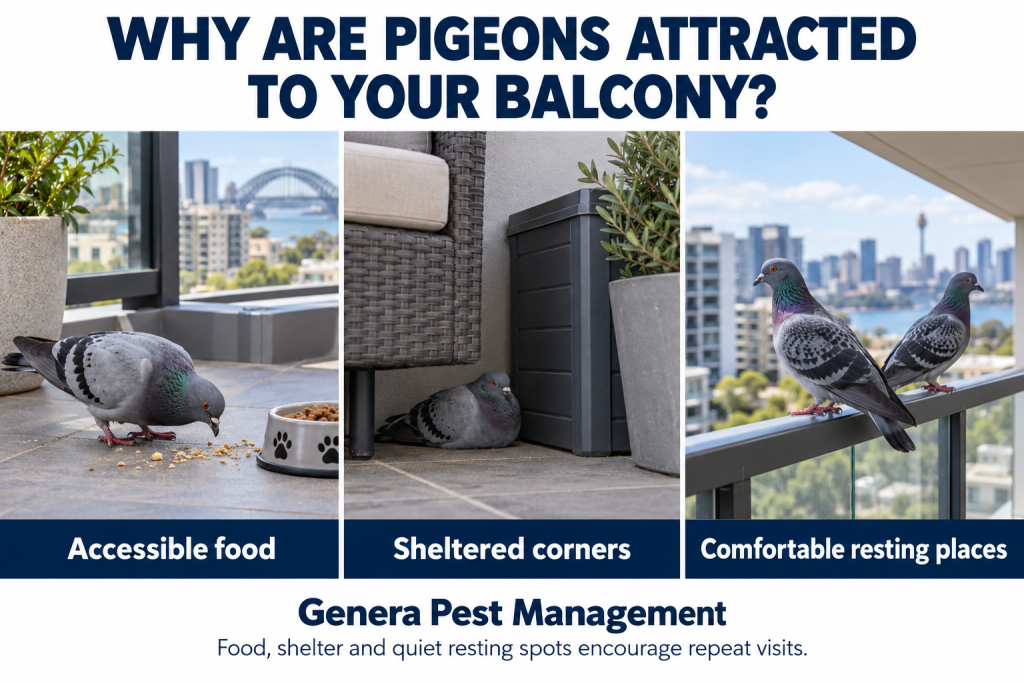
- Accessible food: Check outdoor pet bowls, spilled birdseed and scraps beneath furniture. Remove these sources consistently rather than only when pigeons appear.
- Sheltered corners: Inspect behind storage boxes, beneath chairs and around unused planters from a safe position. These areas can conceal activity you do not notice from inside.
- Resting surfaces: Observe whether birds mainly use the railing, overhead beams or another ledge. This helps establish which part of the balcony needs attention.
A tidy balcony may still attract birds if it provides shelter. Housekeeping is a starting point, but it does not physically exclude them.
Are the pigeons visiting, roosting or nesting?
The frequency and type of activity help determine whether simple changes or a more substantial exclusion system is appropriate. An occasional landing is different from repeated occupation.
- Brief visits: Note whether birds leave quickly and rarely return. Remove obvious attractants and monitor before committing to installation.
- Regular roosting: Repeated resting in the same location, often accompanied by concentrated droppings, warrants assessment. Record the surfaces used and the times you see birds.
- Possible nesting: Carrying twigs, remaining in a concealed corner or repeatedly returning behind furniture suggests closer investigation. Leave the area undisturbed until occupancy has been checked.
Photographs taken from inside your apartment can help explain the pattern. Avoid approaching a nest simply to obtain a clearer image.
What can you do immediately?
Remove manageable attractants and document the problem while leaving suspected nesting areas undisturbed. You can take useful steps without reaching over railings or altering the building.
- Bring food indoors: Feed pets inside where practical and clear outdoor eating areas promptly. Check whether neighbouring feeding activity also needs reporting.
- Reduce unnecessary clutter: Once any nesting concerns have been assessed, reorganise stored items to make the balcony easier to inspect. Keep access to drains and services clear.
- Record what happens: Photograph affected areas and note returning birds. This gives your property manager or installer useful information when discussing the next step.
Do not throw objects or lean outside to chase pigeons. Temporary disturbance does not resolve the reason they are using the balcony.
How should you clean pigeon droppings on a balcony?
Cleaning should control dust and suit the amount of contamination and the accessibility of the affected area. Droppings alone do not establish that birds are infected, but disturbing dried material can create exposure risks.
- Assess the job first: Thick accumulations, inaccessible ledges and extensive contamination warrant professional assessment. Explain whether furniture, floor surfaces or drainage areas are affected.
- Avoid airborne dust: Do not dry sweep or vigorously brush dried droppings. NSW Health advises dampening bird droppings before cleaning and recommends gloves and a P2 respirator in its bird hygiene guidance. NSW Health
- Choose suitable protection and products: NSW Health recommends gloves and a properly fitted P2 respirator when cleaning areas where wild birds have roosted. Follow cleaning product instructions and never mix disinfectants. health.nsw.gov.au
Keep cleaning water and debris from spilling onto neighbouring balconies. Coordinate the clean with prevention so the same surfaces are not immediately fouled again.
Do balcony pigeon deterrents work?
A deterrent is useful only if it addresses the location and behaviour causing the problem. Before purchasing one, ask what it will protect and what access will remain.
- Visual scarers: A plastic owl or reflective item leaves the balcony physically accessible. Monitor the result rather than assuming its presence provides lasting protection.
- Spikes or wire: These may be considered for particular resting surfaces. Ask whether nearby untreated surfaces would still allow birds to occupy the balcony.
- Repellents and other products: Check suitability for the surface, surrounding residents and intended use. Avoid improvised sticky substances or products without clear application instructions.
If birds move from the railing to the furniture, the original activity has shifted rather than stopped. Reassess the whole usable space.
When is balcony bird netting suitable?
Balcony bird netting may suit a space that can be enclosed with a properly designed, complete barrier. Suitability depends on the opening, fixing locations and maintenance access.
- Check the design: Ask how the netting will meet the surrounding surfaces without leaving entry gaps. The installer should explain how residents will access areas needing maintenance.
- Assess building compatibility: Discuss fixing methods, appearance and any effect on doors or services. Confirm that the proposal preserves required access and building functions.
- Plan regular checks: NSW guidance states that humane netting depends on appropriate material, installation, maintenance and inspection. Poorly used netting can entangle wildlife or allow animals inside without an exit. dpird.nsw.gov.au
Avoid draping loose garden netting across the opening. Request a system designed for the balcony and the birds being excluded.
Do you need strata approval for balcony bird proofing?
Check your scheme’s requirements before installing a system, particularly where fixings or external appearance are affected. The approval pathway depends on the proposed work and your building’s documents.
- Ask before ordering: Provide the strata manager with photographs, dimensions and installation details. Request confirmation of the required approval process.
- Identify affected property: Ask whether the proposed fixing surfaces are common property. Do not assume everything within reach from your balcony belongs to your lot.
- Confirm maintenance responsibility: Establish who will inspect, repair and eventually remove the system. NSW guidance says work affecting common property may require changes to the scheme’s by-laws. NSW Government
Tenants should request landlord permission before changes. The landlord can then address any necessary strata approval on the tenant’s behalf. NSW Government
How do you prevent birds being trapped?
Check occupancy before installation and inspect the completed enclosure for birds and unintended openings. A bird leaving briefly does not prove a concealed nest is empty.
- Inspect hidden spaces: Include furniture recesses, stored items and other sheltered areas. Arrange assessment where the contents cannot be checked safely.
- Resolve occupied nests first: Ask the provider how eggs or dependent young affect the timing. Avoid enclosing adults away from young.
- Respond to entrapment promptly: Contact the installer or an appropriate wildlife rescue service. Do not climb outside the balcony or pull entangled wildlife through netting.
NSW guidance specifically recognises distress and injury when wildlife enters beneath netting and cannot escape. Continued inspection is therefore part of the system’s care. dpird.nsw.gov.au
What should a balcony bird proofing quote include?
A useful quote explains the observed problem, proposed coverage and ongoing responsibilities. Compare those details alongside the price.
- Defined coverage: Ask which openings and surfaces will be protected. Confirm whether cleaning and nest assessment are included.
- Installation details: Request the fixing method and any information needed for approval. Clarify access arrangements and potential disruption.
- Follow-up terms: Check warranty conditions, inspection requirements and repair charges. Agree how continued pigeon activity will be investigated.
For suitable options, explore Genera’s bird proofing services.
Frequently asked questions about pigeons on balconies
These answers address common apartment concerns, but the final recommendation should follow assessment of your balcony.
What is the best way to keep pigeons off a balcony?
Remove attractants and assess proofing that addresses the actual landing or nesting areas. There is no single product suitable for every balcony.
- Record where birds spend time. Use that evidence to compare targeted ledge protection with more complete exclusion.
Will cleaning the balcony stop pigeons returning?
Cleaning removes contamination but leaves the space accessible. Birds may continue using the same shelter or resting surface.
- Combine cleaning with practical prevention. Monitor whether fresh droppings appear afterwards.
Can I install balcony netting in a rental apartment?
Seek written landlord permission and check the strata requirements before installation. Renting does not remove the building’s approval process.
- Submit the proposed design and fixing details. Confirm who pays for maintenance and removal.
What if pigeons have already laid eggs?
Leave the nest undisturbed and arrange assessment before proofing. Occupancy affects the timing and appropriate approach.
- Ask about identification, welfare and any relevant requirements. Do not move the nest to another balcony.
Who pays for balcony pigeon control in strata?
Responsibility depends on the affected property, scheme documents and proposed work. There is no universal answer for every building.
- Ask the strata manager to explain responsibility in writing. Separate private balcony work from any proposed common property works.
Take the next step towards a usable balcony
Start with a clear assessment of why pigeons are using your balcony and what protection suits the building. Genera Pest Management can help you discuss the activity and appropriate next steps.
- Share your observations: Describe the affected areas and provide safely taken photographs.
- Request a practical plan: Discuss cleaning, occupancy checks, proofing and approval information.
- Agree on maintenance: Confirm how the installation will be checked and renewed activity reported.
Call Genera Pest Management on 1300 149 549 or book a discovery call to discuss pigeons on your Sydney balcony.