
Effective pigeon control in Sydney starts with removing the reasons pigeons keep returning: accessible food, sheltered resting places and suitable nesting sites. Lasting prevention usually combines changes around the property with correctly installed pigeon proofing and ongoing checks.
If you have cleaned your balcony repeatedly or bought deterrents that made little difference, the frustration is understandable. You want to use your property without constantly clearing droppings or wondering what to try next.
The first step is to establish what pigeons are gaining from the site. Once that is clear, you can choose measures that address the recurring problem.
Why do pigeons keep returning to the same property?
Pigeons return when a property continues to provide useful food or shelter, even after individual birds have been chased away. Feral pigeons adapt readily to urban buildings where these resources remain available. blandshire.nsw.gov.au
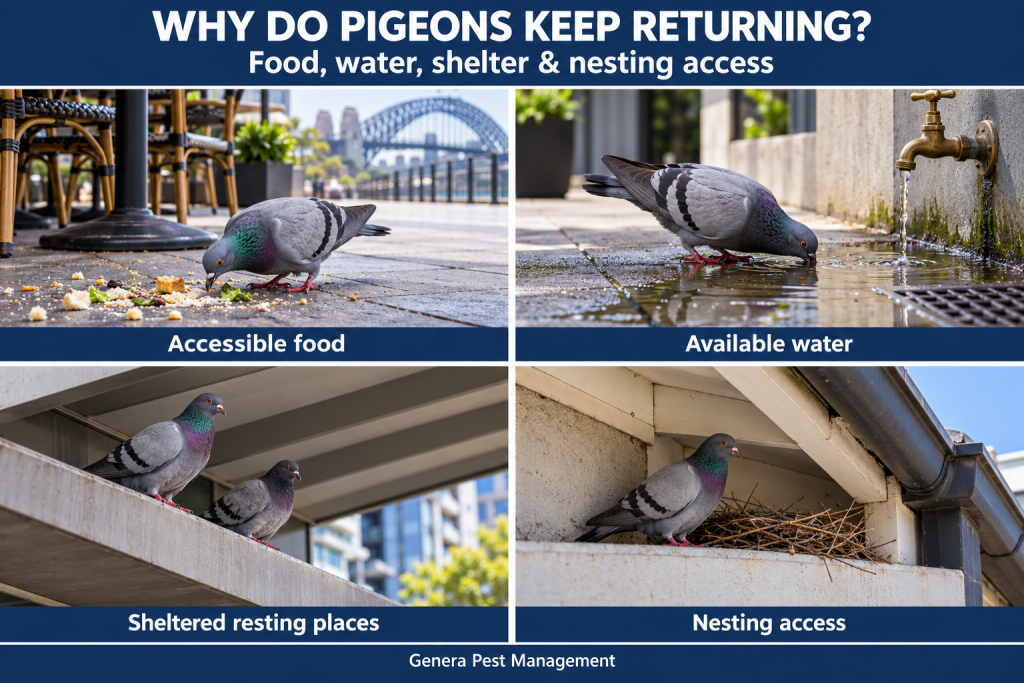
- The attraction remains: A clean balcony may still offer a protected resting place. Cleaning removes the mess but does not physically prevent birds from landing again.
- Only part of the site has been addressed: Protecting one ledge leaves nearby beams, awnings or roof openings available. Inspect the surrounding building before deciding how much coverage is needed.
- The problem extends beyond your boundary: Birds may feed nearby and rest on your property. Where neighbouring activity contributes, coordinated management may be necessary.
What food and water sources attract pigeons?
Accessible scraps, spilled feed and water can make a property worth visiting repeatedly. The NSW Food Authority identifies food, water and shelter as key pest attractants, including for birds such as pigeons. NSW Food Authority
- Outdoor food: Clear tables promptly and collect scraps beneath seating. At home, check whether pet food or intentional bird feeding contributes to the activity.
- Waste storage: Look for overflowing bins, damaged lids and spilled rubbish around collection areas. A tidy dining area will not resolve an accessible food source behind the building.
- Water access: Note leaking fixtures and persistent pooling during inspection. Address maintenance faults without assuming that removing one water source will stop birds using an otherwise attractive site.
For businesses, include cleaners, tenants and waste contractors in the discussion. Prevention works better when everyone follows the same arrangements.
Where do pigeons roost and nest?
Roosting pigeons use a place to rest, while nesting pigeons use it to breed and raise young. Both activities can occur on one property, but the locations and appropriate response may differ.
- Roosting locations: Inspect ledges, signage, beams and awnings from a safe position. Repeated droppings beneath a particular surface can help direct the inspection.
- Nesting locations: Sheltered recesses, roof openings and spaces beneath solar panels deserve assessment. Repeated visits carrying material can indicate nesting activity.
- Hidden access: The visible landing point may lead to a less obvious cavity. Avoid sealing an opening until the space has been checked for birds and dependent young.
For activity beneath an array, read Genera’s solar panel bird proofing guide before arranging work.
What should a pigeon inspection establish?
An inspection should explain where pigeons are active, why they are returning and which changes will address that activity. It should produce a clear scope rather than a recommendation based solely on the number of birds visible.
- Confirm identification: Do not assume every pigeon or dove is a feral pigeon. Native birds are generally protected in NSW, so identification matters before management begins. Environment and Heritage
- Map the activity: Ask the inspector to identify feeding areas, resting surfaces and nesting access. Photographs help explain areas you cannot safely inspect yourself.
- Assess practical constraints: Discuss building access, strata approvals and maintenance requirements. Commercial sites should also explain delivery schedules and operating hours.
Tell the inspector what you have already tried. Knowing where previous measures failed can help avoid paying for the same incomplete approach again.
Which pigeon proofing options can prevent access?
Pigeon proofing should protect the specific opening, surface or space identified during inspection. The appropriate system depends on the building and the birds’ use of it.
- Exclusion netting: Netting can protect suitable building spaces when correctly designed and installed. It requires regular checks to reduce wildlife entanglement risks. dpird.nsw.gov.au
- Ledge protection: Spikes or wire systems may be proposed for particular resting surfaces. Ask how the design covers the whole usable landing area and what limitations apply.
- Mesh and repairs: Suitable barriers can close assessed entry points. Installation should preserve necessary ventilation and access for building maintenance.
- Combined measures: A property may need different solutions for roof openings, ledges and waste areas. Ask why each component is included.
Genera’s bird proofing services provide a starting point for discussing suitable building protection.
Why do pigeon deterrents sometimes fail?
Deterrents can disappoint when they leave the underlying attraction or access unchanged. NSW guidance supports strategic management and recognises that poorly executed programs may fail to deliver lasting reductions in damage. dpi.nsw.gov.au
- Incomplete coverage: Birds may continue using untreated surfaces beside the protected section. Check the whole activity area before concluding that a product is ineffective.
- Strong remaining attractions: Accessible food or established shelter can undermine an isolated measure. Review these conditions alongside the deterrent.
- Installation or maintenance problems: Gaps, displaced components or damaged fixings can compromise protection. Inspect the system rather than simply adding another product.
If you are comparing pigeon deterrents, ask what success should look like at your property. A useful recommendation explains both the intended result and the system’s limitations.
How should pigeon droppings be cleaned?
Cleaning should manage dust exposure and suit the extent, location and condition of the contamination. NSW Health advises against allowing bird droppings to dry and become airborne because dust from infected birds can transmit psittacosis. health.nsw.gov.au
- Assess before disturbing: Large accumulations, enclosed spaces and elevated areas warrant professional assessment. Access risks and contamination can make an apparently simple clean more complicated.
- Control dust: Avoid dry sweeping or brushing that disperses dried material. NSW Health’s bird hygiene guidance includes dampening droppings and using gloves and a P2 respirator. health.nsw.gov.au
- Coordinate cleaning and prevention: Confirm whether cleaning is included in the proposed work. Without suitable management, a freshly cleaned surface may quickly be fouled again.
Droppings alone do not establish that birds are infected. The purpose of precautions is to manage exposure appropriately.
How do you prevent pigeons returning after the work?
Prevention requires maintained proofing, consistent housekeeping and a way to identify renewed activity early. Completion of an installation should include clear responsibilities for checking it.
- Agree on inspections: Ask the installer how frequently the system needs checking. Netting requires regular inspection to identify damage and wildlife hazards. dpird.nsw.gov.au
- Review building changes: Roofing repairs, scaffolding and servicing can disturb installed protection. Ask contractors to report displaced barriers or new openings.
- Keep simple records: Note fresh droppings, locations and returning birds. Compare observations from similar times and viewpoints so changes are easier to interpret.
For strata properties, nominate a reporting contact. Separate complaints from several residents may otherwise conceal a building-wide pattern.
What should a pigeon control quote include?
A useful quote links the proposed work to the identified causes and clearly states its coverage. Compare the scope and maintenance obligations alongside the price.
- Included work: Check access equipment, preparation, cleaning and proofing areas. Confirm any repairs or approvals that remain your responsibility.
- Expected results: Ask which spaces will be protected and how performance will be reviewed. Understand exclusions and warranty conditions before accepting.
- Follow-up arrangements: Establish who responds if activity continues. Clarify whether review visits or maintenance incur additional charges.
For broader context, explore Genera’s bird control services in Sydney.
Frequently asked questions about recurring pigeon problems
What is the best way to stop pigeons coming back?
Identify and address the food, shelter and access sustaining their visits. The appropriate combination depends on the property.
- Start with an inspection of repeated activity. Use the findings to select proofing and housekeeping changes.
Will cleaning my balcony keep pigeons away?
Cleaning alone does not prevent pigeons from landing or nesting again. The balcony may still provide attractive shelter.
- Coordinate cleaning with an assessment of access and resting surfaces. Check whether food is also available nearby.
Can I block a pigeon nesting hole?
Have the opening and space behind it assessed before closing it. Birds or dependent young may remain inside.
- Arrange identification and an appropriate exclusion plan. Do not seal an occupied cavity without professional advice.
Do bird spikes work everywhere?
Spikes are not suitable for every surface or pigeon problem. Their suitability depends on the location and intended use.
- Ask why the proposed system matches the observed activity. Confirm coverage and maintenance requirements.
Can pigeon control permanently remove every pigeon?
A provider cannot reasonably promise to eliminate all future pigeon activity around an open property. The practical goal is reducing access, fouling and recurring problems in defined areas.
- Agree on measurable expectations before work starts. Maintain installed protection and report renewed activity promptly.
Get a clear plan for your recurring pigeon problem
Start by finding out why pigeons keep choosing your property. Genera Pest Management can help you discuss the activity and arrange the appropriate assessment.
- Describe the problem: Explain where pigeons gather, how long it has continued and what you have tried.
- Review the recommendation: Request a clear scope covering the relevant access, attractants and affected areas.
- Plan ongoing prevention: Confirm maintenance and reporting arrangements so you know what to do next.
Call Genera Pest Management on 1300 149 549 or book a discovery call to discuss pigeon control for your Sydney property.