
If you suspect birds nesting in your roof, observe their movements from ground level and arrange an inspection before removing nesting material or sealing openings. The next step depends on the species, whether eggs or dependent young are present and how birds are accessing the building.
Repeated calls above the bedroom or birds disappearing beneath the eaves can leave you wondering how serious the problem is. You want your roof protected, but you also need to avoid making the situation worse.
A clear plan starts with confirming the activity, assessing the nest and arranging exclusion and repairs at an appropriate time.
What are the signs of birds nesting in your roof?
Repeated visits to the same opening, birds carrying nesting material and calls from a concealed space suggest nesting activity. One bird landing on the gutter does not establish that a nest is inside.
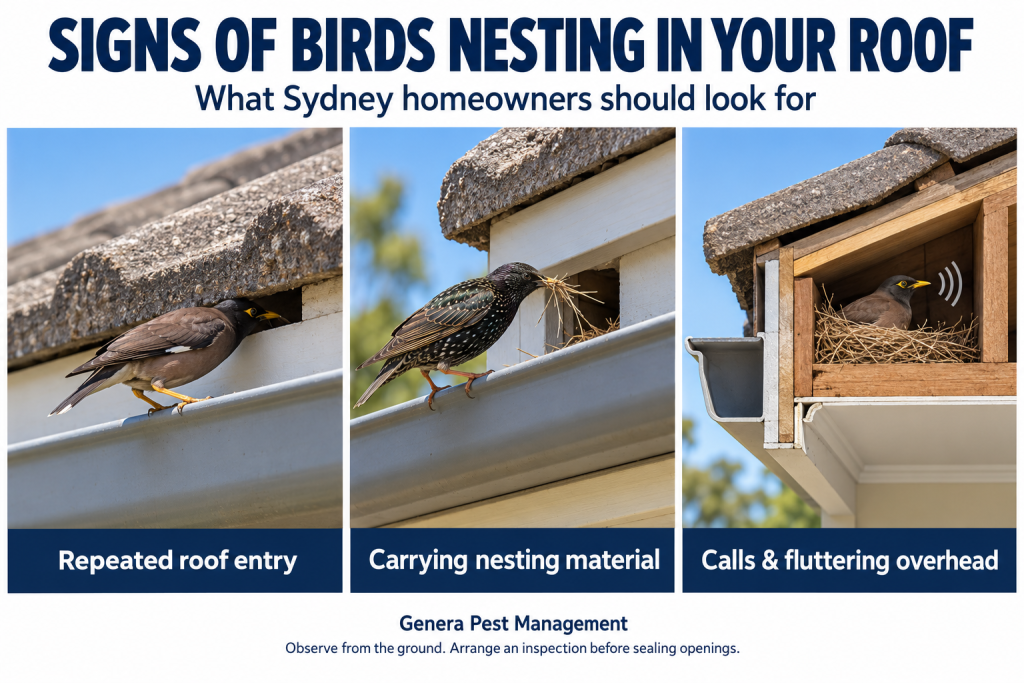
- Regular entry and exit: Watch whether birds disappear beneath tiles or behind roof edges. Note the location and frequency without approaching the opening.
- Nesting material: Grass, twigs or feathers around an opening can help direct an inspection. Debris alone does not confirm whether the nest is currently occupied.
- Calls and movement: Chirping or fluttering above the ceiling may indicate birds. Record when it occurs and whether you also see birds entering outside.
Photographs or a short video taken from a safe position can help explain what you have noticed when booking an assessment.
Could the roof noise be something other than birds?
Yes, sounds above the ceiling can also come from rodents, possums or building movement. Timing and sound provide clues, but they cannot reliably identify the cause by themselves.
- Look for supporting evidence: Visible bird entry makes a bird problem more likely. Without that evidence, ask for an inspection rather than choosing treatment from the noise alone.
- Describe the pattern: Explain whether you hear calls, scratching, running or isolated knocks. Include the rooms affected and whether the sound changes during the day.
- Allow for more than one issue: A roof may have several access points or different causes of noise. Ask the inspector to distinguish confirmed findings from areas needing further investigation.
How do birds get into roof cavities and eaves?
Birds can enter through existing gaps in roof coverings, eaves and other building junctions. The inspection should identify the actual route rather than assuming every visible defect is being used.
- Tiles and roof edges: Displaced tiles or openings around roof edges deserve assessment. A roofer can determine whether repairs are needed to restore weather protection.
- Eaves and fascia areas: Damaged soffit panels or gaps behind fascia boards may provide access. Follow the birds’ observed movements to narrow down the search.
- Vents and penetrations: Openings around services or damaged vent covers should be checked. Any replacement protection must preserve the ventilation or function the opening provides.
Birds beneath solar panels may be outside the roof cavity. Genera’s solar panel bird proofing guide explains that separate situation.
Why must the species and nest be checked first?
Identification and nest assessment determine which actions are appropriate and whether permissions need checking. Native birds are generally protected in NSW, so a bird using your home is not automatically an introduced pest. Environment and Heritage
- Confirm the bird: Introduced Indian mynas can nest beneath house roofs, according to NSW Government guidance. Their presence should still be confirmed rather than inferred from the location. NSW Government
- Assess nest activity: Ask whether the space contains eggs, dependent young or adults. A quiet period does not establish that the cavity is empty.
- Check proposed actions: Management involving protected native animals may require authorisation. The provider should explain relevant requirements before disturbing the birds or nest. Environment and Heritage
Avoid moving an occupied nest yourself. Relocating it is not a substitute for an assessment of species, welfare and applicable requirements.
What should you do while waiting for an inspection?
Leave the entry point undisturbed and collect observations from a safe position. Useful information helps the inspector plan access without requiring you to enter the roof.
- Record the location: Photograph the relevant roof section from the ground. Identify nearby windows, gutters or corners so the opening is easy to locate.
- Keep the route open: Do not plug the gap with foam, mesh or other material. Birds or young may remain inside even when adults are temporarily absent.
- Notify the right person: If you rent, contact the property manager. For shared roofs or strata buildings, ask who must authorise inspection and repairs.
There is no need to climb onto the roof to prove the problem exists. Describe what you can safely see and hear.
When is the right time to exclude birds?
Exclusion should occur only after assessment confirms that the proposed work will not trap birds or separate dependent young from their parents. Timing depends on the actual nest status and species.
- Occupied nests: Ask for a written explanation of the proposed approach. Where immediate exclusion is unsuitable, agree on monitoring and reassessment.
- Apparently inactive nests: Confirm vacancy before closing access. The absence of calls during one observation is insufficient.
- Urgent building repairs: Explain any leak or other immediate concern when booking. The bird specialist and relevant tradesperson may need to coordinate their work.
Do not rely on a universal waiting period or assume a particular month is always suitable. Site findings should guide the schedule.
What does effective roof bird proofing involve?
Roof bird proofing closes suitable access routes after occupancy checks while preserving the building’s ventilation, drainage and maintenance access. Its purpose is to prevent renewed entry.
- Repair building defects: Broken components may require roofing or building work. Ask which repairs the bird management provider undertakes and which need another contractor.
- Protect appropriate openings: Suitable guards or barriers may be recommended for particular locations. Request an explanation of the materials, fixing method and coverage.
- Inspect adjoining areas: Closing one opening may leave another nearby route available. Include the surrounding roofline in the assessment.
Genera’s bird proofing services can help you discuss suitable prevention. If netting is proposed, correct installation and regular checks are essential to reduce wildlife entanglement risks. dpird.nsw.gov.au
Will nesting material and roof damage need attention?
The affected area should be assessed for debris, contamination and building defects before deciding what cleaning or repair work is necessary. Nesting does not automatically mean the whole roof or all insulation needs replacement.
- Clarify cleaning scope: Ask what material needs removal and how access will be managed. Confirm whether cleaning is included in the quote.
- Check affected components: Request photographs of any damaged roof coverings, insulation or ventilation components. Repair recommendations should be supported by findings.
- Use relevant trades: Roofing defects need appropriate roofing expertise. Suspected electrical problems should be referred to a licensed electrician.
Genera’s bird nest removal service provides a starting point for discussing inspection and appropriate nest management.
When should you arrange professional assessment?
Arrange assessment when activity is recurring, the nest cannot be checked safely or work may affect birds inside the building. Early inspection helps establish the right response before openings are altered.
- Concealed activity: Persistent calls or repeated entry warrant investigation. Tell the provider if the suspected location cannot be seen from outside.
- Trapped or injured wildlife: Seek wildlife rescue advice promptly. Animals trapped at height require specialist assistance rather than homeowner handling. wires.org.au
- Planned roof work: Tell contractors about suspected nesting before repairs begin. Agree who checks occupancy and who authorises closing the opening.
Ask for findings, proposed timing, repair responsibilities and follow-up arrangements in writing.
Frequently asked questions about birds nesting in roofs
These answers cover common decisions homeowners face before arranging exclusion. Your property’s inspection findings should determine the final approach.
Can I remove a bird nest from my roof myself?
Have the species and nest activity assessed before disturbing it. Protected native bird nests should not be treated as ordinary building debris. wires.org.au
- Explain whether you have seen eggs, young or visiting adults. Leave concealed nests undisturbed while seeking advice.
Will birds leave the roof on their own?
Birds may leave, but an accessible nesting space can remain available for future use. Temporary absence does not confirm the problem is resolved.
- Arrange vacancy checks before repairs or proofing. Address the entry route once exclusion is appropriate.
How long do birds stay in a roof nest?
There is no reliable single timeframe without identifying the species and breeding stage. Ask for a schedule based on inspection.
- Agree when the nest will be reassessed. Confirm what evidence is needed before access can be closed.
Can I seal the hole when the adult birds fly out?
No, adults leaving does not prove the nest is empty. Eggs or dependent young may remain concealed.
- Have the interior assessed before sealing. Avoid fitting an improvised exit device to an unchecked nesting space.
Will removing the nest stop birds returning?
Nest removal alone leaves the access route available. Appropriate proofing and repairs are needed to address repeat entry.
- Check surrounding openings as well as the original location. Inspect repaired areas after later building work.
Get a clear plan for birds in your roof
Start with an inspection that confirms the activity and explains the next step. Genera Pest Management can help you discuss your concerns and arrange an appropriate assessment.
- Describe what you have noticed: Share the location, sounds and any photographs. Mention planned repairs or access restrictions.
- Request a coordinated plan: Confirm nest checks, exclusion timing and necessary repairs. Establish who handles each part of the work.
Call Genera Pest Management on 1300 149 549 or book a discovery call to discuss birds nesting in your Sydney roof.