
Bird management in Sydney starts with identifying the species, understanding why birds are using your property and choosing suitable measures to reduce access, food sources and repeat activity. Depending on the problem, this may involve bird proofing, changes to waste management, assessed nest removal or a coordinated commercial management program.
Perhaps pigeons keep fouling your balcony. You might hear birds inside the roof or find them entering a warehouse. Repeated cleaning becomes frustrating when the birds return the next morning.
The right starting point is understanding the activity before paying for a particular deterrent. This guide explains what to look for and how to choose your next step.
What are the main signs of a bird problem?
Repeated droppings, nesting material and birds returning to the same building areas indicate activity worth investigating. Where and when these signs appear helps distinguish an occasional visitor from an established problem.
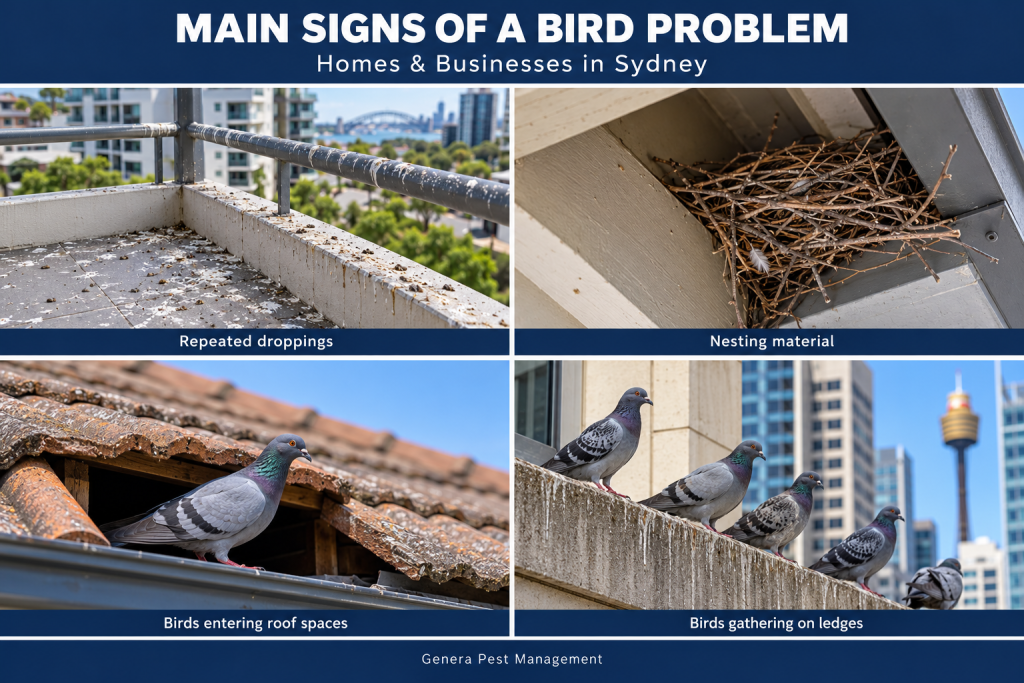
- Droppings beneath regular resting places: Check balconies, awnings, signs and roof ledges from a safe position. A recurring concentration can help identify where birds spend time.
- Noise or material around roof openings: Calls, movement and nesting debris may indicate birds using eaves or cavities. Noise alone does not identify the species, so an inspection should confirm the cause.
- Birds entering occupied buildings: Repeated entry into loading docks, dining areas or stock storage requires closer assessment. Record the entrances used and whether activity follows deliveries, meals or opening hours.
Which birds are causing the problem?
Species identification comes before selecting a control method because different birds have different behaviours and protection requirements. A bird causing inconvenience is not automatically an introduced pest species.
- Feral pigeons: Look for repeated use of sheltered building areas and nearby feeding opportunities. Establish whether birds are resting, breeding or travelling between your property and another location.
- Introduced mynas and starlings: These should be distinguished from native birds before management begins. In particular, the introduced Indian myna and native noisy miner should not be treated as interchangeable.
- Native birds: Native birds are generally protected in NSW, with limited exceptions. Activities involving protected birds may require authorisation, so check the species and proposed work before proceeding. Environment and Heritage
Photographs taken without approaching or disturbing birds can help with identification. Leave uncertain identification to someone qualified to assess it.
Are the birds nesting, roosting or feeding?
Nesting involves breeding activity, roosting involves resting and feeding involves accessing food. A property may support all three, but each points towards different management priorities.
- Nesting: Repeated visits to a sheltered opening or visible nest material warrant assessment. Eggs or dependent young can affect the timing and suitability of exclusion work.
- Roosting: Birds repeatedly resting on ledges or structural beams may require changes to those landing areas. Removing a nest elsewhere will not necessarily address the roost.
- Feeding: Food scraps, exposed pet food and accessible rubbish can encourage return visits. Reducing those opportunities should form part of the response. Campbelltown City Council
What problems can birds cause around a property?
The main concerns are fouling, nesting debris, cleaning demands and disruption to how the property is used. The significance depends on the location, amount of activity and people or materials exposed.
- Homes and apartments: A fouled balcony or occupied roof space can create repeated maintenance problems. Inspect affected surfaces and drainage rather than assuming the extent of damage from droppings alone.
- Commercial properties: Birds inside dining or storage areas can interfere with hygiene procedures and daily operations. Managers should identify affected areas and coordinate cleaning with the management response.
- Shared buildings: Activity may extend across several balconies, roof sections or neighbouring premises. Treating one small area can leave other attractive locations available.
What happens during a bird management inspection?
A useful inspection identifies the birds, maps their activity and establishes what makes the property attractive or accessible. It should give you a reasoned recommendation and a clear scope for proposed work.
- Inspect activity and access: Ask which nesting sites, resting places and entry points were identified. Photographs can help explain locations that owners cannot safely inspect.
- Assess practical constraints: Discuss roof access, operating hours, resident access and maintenance needs. Strata or building approvals may also need checking before installation.
- Explain the recommendation: The proposal should connect each measure to an observed problem. Ask what cleaning, repairs, monitoring and follow-up are included.
Genera’s bird nest removal service describes inspection as the starting point for determining the location and extent of nesting activity. Genera Pest Management
Which bird control options should you consider?
The appropriate option depends on the species, building layout and reason birds are returning. Effective pest bird management may combine physical exclusion, attractant reduction and other professionally assessed measures. NSW guidance supports a coordinated approach rather than isolated control activity. dpi.nsw.gov.au
- Bird netting: Netting can exclude birds from suitable building spaces. Correct design, installation and regular checks are essential to reduce entanglement risks. dpird.nsw.gov.au
- Spikes or wire systems: Ask whether these suit the specific ledge, target species and resting behaviour. Confirm coverage and maintenance requirements before choosing a system.
- Mesh and building repairs: Suitable barriers may close assessed access points. Installation must account for birds already inside and the building’s ventilation and servicing needs.
- Other management methods: Some sites need specialist consideration beyond proofing. Ask why a proposed method is appropriate and what welfare safeguards apply.
Explore Genera’s bird proofing services when comparing building protection options.
What does humane bird control involve?
Humane bird control considers animal welfare throughout assessment, installation and ongoing management. The equipment alone does not determine whether a program is appropriate.
- Check before closing openings: Establish whether birds or dependent young are present. Sealing an occupied space without assessment can trap animals.
- Maintain exclusion systems: Damaged or loose netting requires attention. NSW guidance specifically identifies regular checks as necessary to reduce wildlife injuries and deaths. dpird.nsw.gov.au
- Confirm applicable requirements: Protected native bird management may require a licence. Ask the provider to explain any permissions relevant to the proposed activity. Environment and Heritage
How does management differ between homes and businesses?
Homes usually need a response to a particular nesting or resting site, while businesses may need broader operational changes. The surrounding activity often matters as much as the building itself.
- Homes and strata: Roof cavities, balconies and solar arrays need different assessments. Genera’s solar panel bird proofing guide explains its approach to protecting spaces beneath panels. Mesh Installation & Nest Removal Services
- Warehouses and factories: Discuss delivery access, open doors and stock locations during inspection. Proposed works should account for normal operations.
- Food premises: Observe when birds enter and what attracts them. In Genera’s Sydney university food court case study, pigeons entered through automatic doors activated by students, demonstrating why behavioural observation mattered. generapestmanagement.com
How can you reduce repeat bird activity?
Prevention combines fewer feeding opportunities, suitable exclusion and maintenance of the protected areas. Removing birds without addressing why they return can leave the original problem unresolved.
- Improve food and waste handling: Clear outdoor food scraps and keep rubbish contained. Where relevant, avoid leaving pet food exposed. Campbelltown City Council
- Review changes to the building: Roofing work, scaffolding or new equipment may affect existing protection. Ask contractors to report gaps or displaced barriers.
- Record recurring activity: Note locations, times and changes after work. This gives the provider useful evidence when reviewing performance.
How should you compare bird control quotes?
Compare the assessed problem, proposed scope and follow-up arrangements alongside the price. A cheaper installation may cover a smaller area or exclude work another quote includes.
- Check inclusions: Ask about access equipment, cleaning, repairs and disposal. Confirm any exclusions in writing.
- Understand expected results: Ask which areas the proposed work protects and how results will be reviewed. Clarify maintenance responsibilities and warranty conditions.
- Request site-specific pricing: Height, access and the extent of activity can affect the work required. Genera’s Randwick hotel bird management case study explains why costs vary between properties. Pigeon Control Case Study
Frequently asked questions about bird management in Sydney
How do I stop pigeons coming back?
Start by identifying their feeding, resting and nesting opportunities. The response should address the locations they repeatedly use.
- Reduce accessible food sources and assess suitable proofing. Monitor activity afterwards to identify remaining access or attractants.
Can I remove a bird nest myself?
Arrange species and nest assessment before disturbing it. Native bird protections and active breeding can affect what action is appropriate. Environment and Heritage
- Avoid blocking access while birds may remain inside. Seek advice where identification or nest activity is uncertain.
Do bird spikes work for every bird problem?
No single deterrent suits every location or behaviour. Ask whether spikes address the particular resting surface identified during inspection.
- Compare the proposal with exclusion or building repairs. Request an explanation of the system’s limitations.
How long does bird management take?
Timing depends on the inspection findings, access arrangements and proposed work. Breeding activity or a staged program may affect scheduling.
- Request separate timeframes for assessment, installation and follow-up. Confirm what could change the schedule.
Is bird management a one-off service?
Some properties need limited proofing work, while others require ongoing review. Installed systems still need maintenance.
- Agree who checks the system and reports damage. Commercial sites should also review food sources and operating practices.
Take the next step towards managing your bird problem
Start with an assessment that explains what is happening and which measures suit your property. Genera Pest Management can help you discuss your concerns and arrange the next step through its bird control Sydney service.
- Describe the activity: Note where birds gather, when they appear and how the problem affects your property.
- Request a clear plan: Discuss inspection, recommended works and follow-up before committing.
Call Genera Pest Management on 1300 149 549 or book a discovery call.