
Bird dropping removal in Sydney should begin with assessing the amount of waste, affected surfaces and access conditions. Small, accessible deposits present a different task from accumulated fouling inside a roof space, above an entrance or around food-handling areas. Specialist assessment is appropriate where cleaning could spread contamination or involve difficult access.
Perhaps your balcony needs cleaning again, or droppings are accumulating beneath a commercial awning. You want the area usable without creating another problem during removal.
The right plan addresses both the existing contamination and the birds responsible. Cleaning alone leaves the cause of repeat fouling unresolved.
What should you assess before cleaning bird droppings?
Assess the extent, condition and location of the fouling before choosing a cleaning method. The visible patch may be only part of the affected area.
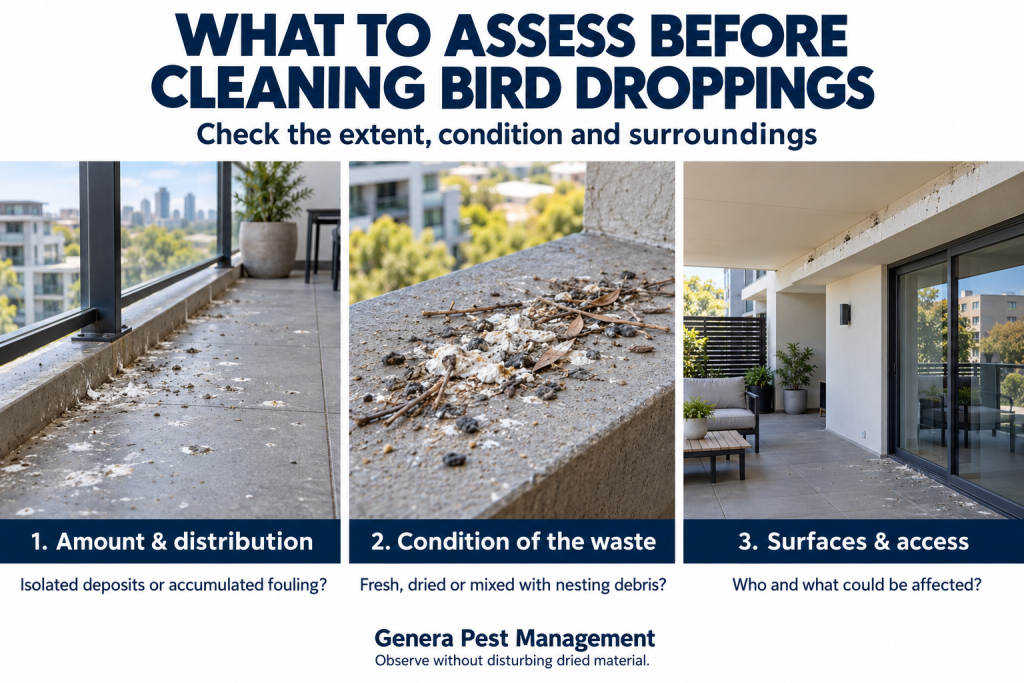
- Amount and distribution: Note whether there are isolated deposits or repeated layers across a larger space. Photograph the area without disturbing dried material.
- Condition: Record whether the waste is fresh, dried or mixed with nesting debris. Avoid scraping it simply to determine how deeply it has accumulated.
- Surroundings: Identify nearby doors, outdoor furniture, equipment and areas people regularly touch. These details help define what needs protection during cleaning.
Also look above the deposits from a safe position. A ledge, beam or sheltered recess may explain where the fouling originates.
Are bird droppings always a health hazard?
Bird droppings can present exposure risks, but their presence does not prove that the birds are infected or that anyone will become ill. Risk depends on the circumstances, including how contaminated material is disturbed.
- Dust exposure: NSW Health identifies inhalation of dust containing droppings, feathers or secretions from infected birds as a route of psittacosis transmission. The disease is uncommon, but exposure deserves appropriate precautions.
- Appearance is insufficient: Birds can carry infection without obvious illness. Neither a healthy-looking bird nor a clean-looking surface establishes that exposure controls are unnecessary.
- Keep claims proportionate: Assessment should explain the actual task and controls. Avoid assuming that every dropping requires emergency decontamination. health.nsw.gov.au
If you become unwell after significant bird-related exposure, seek medical advice and describe the circumstances. A cleaning contractor cannot diagnose an infection.
When does cleaning require specialist assessment?
Seek specialist assessment when contamination is substantial, access is difficult or the cleaning process could expose other people. There is no universal deposit size that determines every situation.
- Accumulated waste: Extensive dried fouling or material mixed with nests may need a planned removal process. Ask how dust and waste handling will be controlled.
- Elevated or enclosed areas: Roofs, ledges and roof cavities introduce access concerns alongside contamination. Do not climb or enter concealed spaces solely to inspect the waste.
- Sensitive locations: Food areas, occupied workplaces and shared entrances need careful coordination. Explain who uses the area and what operations must continue.
A useful assessment identifies the work required rather than automatically recommending the most extensive service.
How do affected surfaces change the cleaning approach?
The cleaning method must suit the material beneath the droppings as well as the contamination. Removing visible waste and repairing permanent surface damage are separate tasks.
- Hard surfaces: Tiles, metal and painted finishes have different cleaning tolerances. Ask how the proposed products and equipment will protect the finish.
- Porous materials: Timber, fabric or other absorbent materials may require closer assessment. Replacement should be supported by findings rather than assumed.
- Equipment: Solar panels, electrical components and ventilation equipment need appropriate specialist input. Avoid directing water or tools into concealed components.
Ask what result is achievable. A cleaned surface may retain staining, and that should be explained before work begins.
Which cleaning practices can spread contamination?
Dry disturbance and uncontrolled spraying can spread dust or contaminated droplets beyond the original area. The contractor should explain how the selected method manages that risk.
- Dry sweeping: Avoid brushing dried droppings into the air. NSW Health advises dampening bird droppings before cleaning in its bird hygiene guidance. health.nsw.gov.au
- Ordinary vacuuming: Do not assume a household vacuum is suitable. NSW Health’s psittacosis control guidance warns that vacuuming can aerosolise infectious particles. health.nsw.gov.au
- Uncontrolled pressure washing: Spraying can distribute material onto adjacent surfaces. NSW Health specifically cautions against dust- and aerosol-generating cleaning after sick or dead birds have contaminated an indoor area. health.nsw.gov.au
For substantial bird fouling, ask for a method suited to the site. A familiar cleaning tool is not automatically appropriate.
What protective measures should professional cleaning include?
Protection should follow the task assessment and account for workers, occupants and adjacent areas. Equipment alone does not replace careful work planning.
- Personal protection: NSW Health recommends gloves and a properly fitted P2 respirator when cleaning areas where wild birds have roosted. The contractor should assess any additional protection required.
- Product selection: Cleaning and disinfection are different stages. Products must suit their intended use, and disinfectants should never be mixed with other cleaning products.
- Work practices: Ask how equipment, clothing and hands will be cleaned afterwards. Contamination should not be transferred into vehicles or occupied rooms. health.nsw.gov.au
These considerations help you assess a proposal. They are not a complete procedure for undertaking extensive bird waste removal yourself.
How should access and neighbouring areas be managed?
The work area should be controlled so occupants and passers-by are not exposed to the cleaning process. Restrictions depend on the location and method.
- Shared access: Discuss entrances, walkways and balconies before scheduling. Confirm whether temporary closures or alternative routes are necessary.
- Adjacent property: Ask how debris and cleaning water will be kept away from neighbouring balconies, vehicles and outdoor seating. Include waste collection and disposal arrangements.
- Building approval: Notify the property manager where common areas or access equipment are involved. Confirm who authorises the work and communicates with residents.
Do not assume after-hours work removes every concern. The cleaning plan still needs to account for remaining occupants and surrounding property.
What changes if bird droppings affect food premises?
Bird contamination around food premises requires coordination with the business’s food safety procedures. Cleaning must address affected surfaces while bird access is investigated.
- Protect food operations: Notify the responsible manager and keep affected equipment or areas out of use pending assessment. Identify whether exposed food or food-contact surfaces are involved.
- Address pest access: NSW Food Authority guidance requires practical measures to prevent pest entry, harbourage and breeding, and to eradicate pests found on the premises.
- Keep records: Document findings, cleaning and corrective actions. Inspection and treatment reports help track whether the underlying problem has been addressed. NSW Food Authority
The response should reflect the actual contamination. An outdoor ledge and an internal food preparation surface need different consideration.
What if sick or dead birds are present?
Avoid touching or moving sick or dead wildlife and seek the appropriate advice before continuing. Their presence changes the assessment.
- Keep others away: Prevent children and pets approaching. Record observations from a safe distance.
- Report suspected disease: NSW Health advises reporting sick or dead wildlife to the Emergency Animal Disease Hotline on 1800 675 888. Injured or orphaned wildlife needs advice from an appropriate rescue provider.
- Tell the contractor: Explain what you found before attendance. Do not place carcasses into waste bags without relevant instructions. health.nsw.gov.au
How can you prevent further bird fouling?
Prevent repeat fouling by addressing the resting, feeding or nesting activity above the cleaned area. The prevention plan should follow observation and inspection.
- Reduce attractants: Review food scraps, exposed feed and waste handling. Consistent housekeeping supports the response.
- Assess proofing: Suitable barriers or ledge protection may reduce access to identified areas. Check occupancy before enclosing nesting spaces.
- Monitor results: Record fresh deposits and inspect installed protection as recommended. Report recurring activity before contamination builds again.
Genera’s Randwick hotel case study distinguishes pigeon management from the subsequent cleaning recommendation. It demonstrates why the two tasks need coordination. Pigeon Control Case Study
Frequently asked questions about bird dropping removal
These answers clarify common decisions before arranging pigeon dropping cleaning or broader assessment.
Can I clean a few bird droppings myself?
A small, accessible deposit may be manageable with appropriate precautions. Difficult access, uncertain contamination or substantial accumulation warrants advice.
- Avoid dry disturbance. Seek assessment if you cannot clean without exposing yourself or others.
Should I pressure wash pigeon droppings?
Do not choose pressure washing without assessing spread and surface compatibility. Uncontrolled spraying can affect surrounding areas.
- Ask a suitable contractor to explain the method. Include runoff management in the discussion.
Does every affected surface need disinfecting?
Disinfection requirements depend on contamination and intended surface use. Cleaning and disinfection should not be treated as interchangeable.
- Request an explanation of product selection. Confirm compatibility and required application conditions.
Will cleaning stop pigeons returning?
Cleaning removes existing waste but does not exclude birds. The same resting or nesting location may remain available.
- Combine cleaning with bird assessment. Monitor for renewed fouling.
What should a bird waste removal quote include?
It should define the affected areas, cleaning method, access and disposal scope. Prevention work may be quoted separately.
- Clarify exclusions and expected results. Confirm whether staining or building repairs remain outside the service.
Arrange an assessment of the fouling and its cause
Start with a plan that addresses contamination, access and recurring bird activity. Genera Pest Management can help you discuss the problem and clarify what cleaning or specialist input is appropriate.
- Share the details: Describe the location and provide safely taken photographs.
- Review prevention: Discuss bird proofing options alongside the cleaning scope.
Call Genera Pest Management on 1300 149 549 or book a discovery call to discuss bird fouling at your Sydney property.