
Bird deterrents not working as expected may be poorly matched to the species, installed with incomplete coverage or undermined by accessible food and shelter. Birds can also become accustomed to repeated sounds and visual scarers. Improving results starts with identifying which factor explains the continuing activity.
If you have bought spikes, reflective tape or a plastic owl and pigeons keep coming back, another purchase may feel like the only option. First, establish whether birds are ignoring the device, bypassing it or using an untreated area.
Those are different problems. Understanding the difference helps you choose a practical next step.
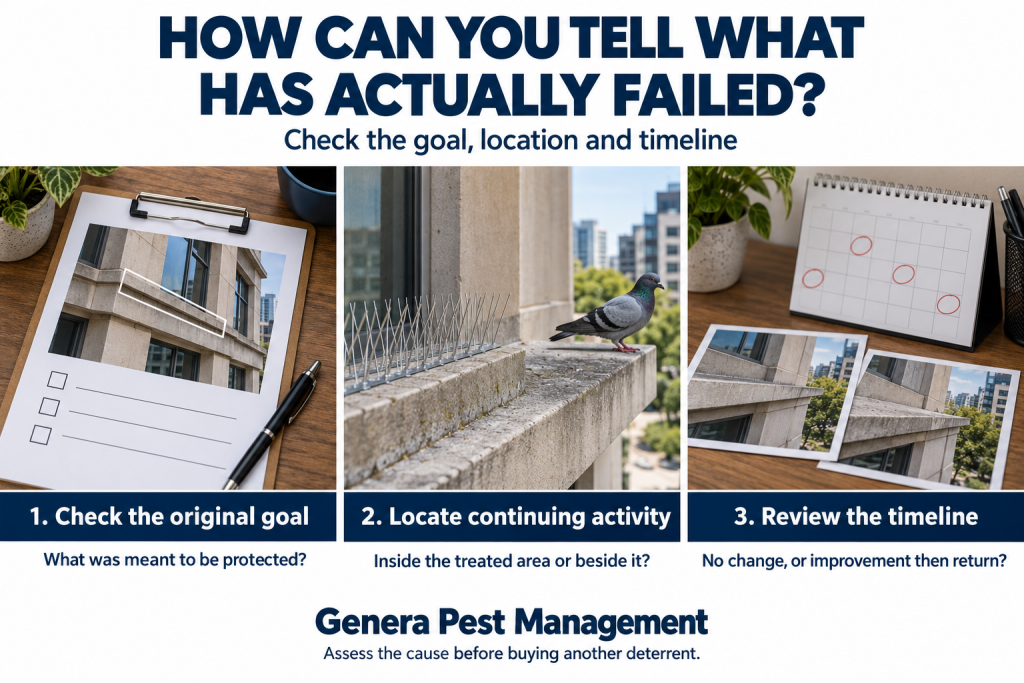
How can you tell what has actually failed?
Compare the intended protection with the activity you are still observing. A deterrent protecting one ledge cannot be expected to exclude birds from the entire building.
- Check the original objective: Find the quotation or product instructions. Establish which species, surfaces or spaces the system was intended to protect.
- Locate the continuing activity: Record whether birds land within the treated area or beside it. Photographs can help distinguish incomplete coverage from failure on a protected surface.
- Check the timeline: Note whether there was an initial improvement followed by renewed activity. That pattern can help direct the reassessment.
Avoid judging results from a single bird flying past. Focus on repeated landing, entry, nesting or fresh fouling in the area you wanted protected.
Do birds become accustomed to bird scarers?
Yes, habituation can reduce the effectiveness of repeated sound and visual deterrents. Birds may learn that a familiar stimulus does not represent a meaningful threat.
- Stationary objects: Predator models and similar devices may initially attract attention. Continued presence does not guarantee continued avoidance.
- Repetitive signals: Predictable sounds or movements can lose their effect. A device operating normally may still produce little useful response.
- Short-lived improvement: If activity stopped briefly and resumed, habituation is one possibility. Check food, nesting and coverage before deciding it is the only cause.
NSW guidance identifies habituation as a major limitation of scaring devices. City of Ryde also advises that fluttering strips, mirrors and similar scarers are unlikely to provide lasting control. dpi.nsw.gov.au
Could food sources be undermining your deterrents?
Accessible food can continue rewarding birds for visiting, even when a deterrent makes part of the site less convenient. Investigate feeding opportunities alongside the equipment.
- Household sources: Check outdoor pet bowls, spilled seed and intentional feeding. Bring pet feeding indoors where practical.
- Commercial waste: Inspect bin lids, spilled rubbish and outdoor dining areas. Include cleaning and waste contractors in the discussion.
- Predictable availability: Note whether bird activity follows meal breaks, rubbish collection or deliveries. This can reveal a source missed during a quiet inspection.
City of Ryde recommends avoiding bird feeding, feeding pets indoors where possible and keeping rubbish in covered containers. These measures address attractants rather than relying solely on scarers. City of Ryde
Is incomplete coverage allowing birds to bypass protection?
Birds can continue using a property when untreated gaps or adjoining surfaces remain available. The existing system may need adjustment rather than wholesale replacement.
- Spikes: Inspect the usable ledge around and behind the strips. Product layout must account for the surface rather than just its front edge.
- Netting: Look for damaged edges, openings around structures or unsecured maintenance access. Arrange professional inspection where these cannot be checked safely.
- Separate locations: Birds may move from a protected ledge to nearby signage or beams. Map those locations before extending the work.
Manufacturer guidance emphasises full ledge coverage for spikes and appropriate fitting for exclusion netting. The required details depend on the selected system.
Could poor installation or deterioration explain the problem?
Loose components, unsuitable attachments or later damage can compromise an otherwise suitable product. Check installation condition before concluding that the method itself is ineffective.
- Attachment problems: Report lifting bases, displaced strips or loose supports. Ask whether the mounting surface also needs repair.
- Debris accumulation: Leaves and nesting material can interfere with protection. Cleaning should follow occupancy and contamination assessment.
- Subsequent work: Painting, roofing repairs or equipment servicing may have disturbed the installation. Establish what changed before activity resumed.
Keep photographs of the completed original work where available. They provide a reference when discussing repairs or warranty coverage.
Are nesting birds more difficult to deter?
An established nesting location requires different consideration from an occasional landing point. A product suitable for a briefly used ledge may be inappropriate for that situation.
- Look for breeding activity: Repeated visits carrying material or food warrant assessment. Do not pull apart a nest to investigate.
- Check species suitability: Conventional pigeon spikes may leave opportunities for smaller birds. Some smaller species can use them to support nest material.
- Review the method: Some products are expressly unsuitable for nesting areas. Ask whether appropriate exclusion would better address the location.
Occupied nests need assessment before alteration. Do not seal an opening while birds or dependent young may remain inside.
Can neighbouring roosts keep the problem going?
Nearby resting or nesting sites can contribute to continued activity around your property. Your building may be one part of a wider daily movement pattern.
- Observe boundaries: Note birds travelling between roofs, balconies and feeding locations. Record what you can see without entering neighbouring property.
- Coordinate shared areas: In strata buildings, several residents may report related activity. Ask the manager to consider common property and adjoining affected areas together.
- Set achievable objectives: Protection may exclude a defined space without eliminating birds from the neighbourhood. Agree on the outcome your provider is expected to deliver.
NSW pest-bird guidance recognises that bird movements can make collaboration between neighbouring land managers relevant. A broader assessment may therefore be more useful than repeatedly treating one complaint location. www.dpi.nsw.gov.au
What should a professional reassessment include?
Reassessment should connect the continuing activity with the existing system, surrounding attractants and building layout. It should explain the cause before recommending additional purchases.
- Species and behaviour: Confirm which birds are present and how they use the site. Compare those findings with the product’s intended application.
- System condition: Check coverage, attachments and maintenance access. Identify whether repair, redesign or replacement is justified.
- Practical recommendations: Separate work on the installation from housekeeping, cleaning or building repairs. Clarify responsibilities and the sequence of actions.
Genera’s university food court case study demonstrates the value of observing behaviour: pigeons used automatic doors opened by students. The findings informed that project’s response. generapestmanagement.com
How should you measure improvement?
Measure the problem you wanted resolved using repeatable observations. Fresh evidence is more useful than a general impression that birds are still nearby.
- Use consistent locations: Photograph the same affected surfaces from safe viewpoints. Note the date and any cleaning completed.
- Record relevant activity: Track entry beneath panels, landing on treated ledges or fresh droppings. Distinguish these from birds passing overhead.
- Agree on review: Confirm when the provider will evaluate results. Establish what continuing activity would trigger another inspection.
Ask for a written scope before approving changes. It should identify expected coverage, limitations and follow-up arrangements.
Frequently asked questions about ineffective bird deterrents
These answers address common concerns before changing an existing bird management approach.
Why did my plastic owl work initially and then stop?
Birds may have become accustomed to it. Habituation is a recognised limitation of visual scarers.
- Check whether food or shelter remains available. Assess physical exclusion where suitable.
Why are pigeons sitting beside installed spikes?
Untreated landing space may remain beside the protected section. The birds may be bypassing the installation.
- Photograph where they sit. Ask the installer to review the coverage.
Will a stronger ultrasonic device solve the problem?
Do not assume that a more powerful device will improve results. NSW guidance reports ineffective ultrasonic trials and notes that most birds cannot hear ultrasound at the frequencies discussed.
- Seek evidence for the target species. Compare suitable alternatives before purchasing. dpi.nsw.gov.au
Should I combine several bird deterrents?
Combine measures only where each addresses an identified part of the problem. Adding unrelated products can increase cost without closing access.
- Request an explanation for each component. Include remaining attractants and maintenance needs.
When should I replace an existing system?
Replace it when assessment shows it is unsuitable or cannot be restored effectively. Some problems need repair or additional coverage instead.
- Compare the options in writing. Confirm costs, limitations and expected results.
Find out why birds keep returning
Start with a reassessment that explains the cause of continuing activity. Genera Pest Management can help you discuss the existing protection and appropriate next steps.
- Share what you have tried: Provide product details, photographs and a timeline of results.
- Request a clear plan: Discuss repairs, bird proofing options and measures addressing remaining attractants.
Call Genera Pest Management on 1300 149 549 or book a discovery call to discuss bird deterrents that are not working at your Sydney property.