
Bird control for restaurants starts with reducing accessible food, investigating entry routes and protecting food-handling areas. Effective management combines practical housekeeping, suitable exclusion, coordinated cleaning and monitoring. The plan must account for customer movements, outdoor dining and deliveries throughout service.
If staff repeatedly chase pigeons from tables while clearing plates and serving meals, the problem can quickly become disruptive. You need arrangements staff can maintain during busy periods, rather than another task that falls away when service peaks.
Start by identifying where birds feed, rest and enter. Then connect each finding with a practical action and someone responsible for completing it.
Why are birds attracted to restaurants and cafés?
Food scraps, accessible waste and sheltered resting places can encourage birds to visit repeatedly. The attraction may extend beyond the tables where customers notice them.
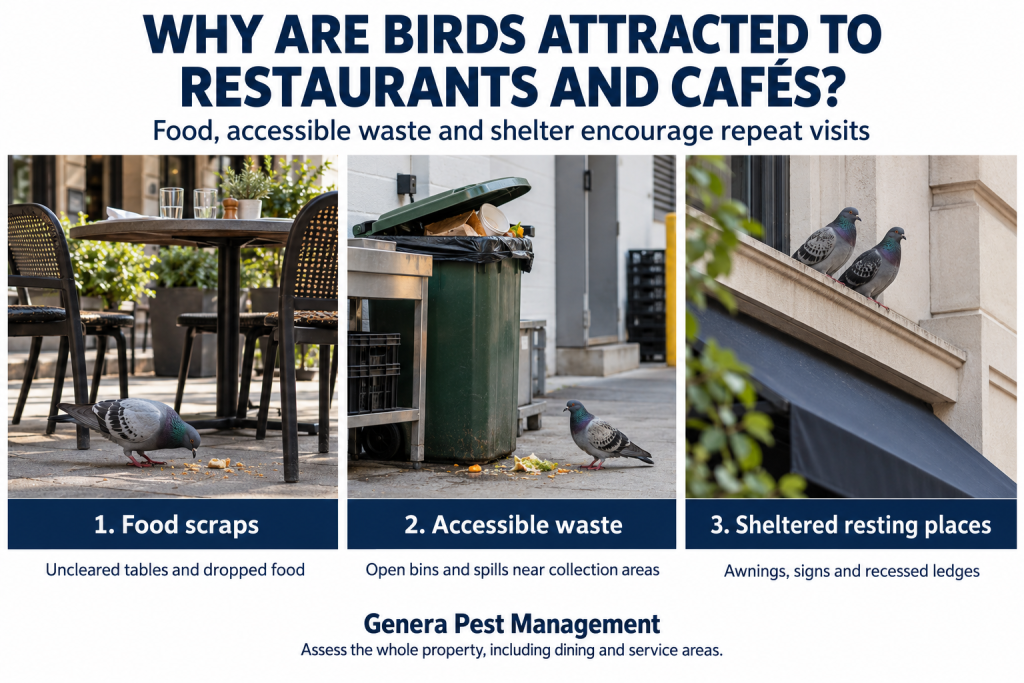
- Outdoor dining: Unattended plates and dropped food provide opportunities between customers. Observe whether visits increase when tables remain uncleared.
- Waste areas: Spills around bins or accessible bags can sustain activity behind the premises. Include shared collection areas in the assessment.
- Building features: Awnings, signs and recessed ledges may provide places to rest nearby. Birds can use these locations before approaching food.
NSW Food Authority guidance identifies food, water and shelter as pest attractants and includes pigeons among pests affecting food premises. NSW Food Authority
What should happen when birds approach exposed food?
Staff should protect the food and refer suspected contamination to the responsible manager immediately. The response must distinguish a nearby bird from actual contact or fouling.
- Direct contact: Food a bird has pecked, stood on or fouled should not be served. Do not assume removing the visibly affected portion makes it suitable.
- Affected equipment: Remove contaminated utensils or service items from use. Follow the premises’ cleaning and sanitising procedures before reuse.
- Incident details: Record what happened and where. Repeated incidents can reveal a particular table, service position or overhead resting point needing attention.
The Food Standards Code requires businesses to protect food from pest-related contamination. Prevention and a clear staff response should operate together. Food Standards Australia New Zealand
How can outdoor dining areas be managed practically?
Reduce feeding opportunities while keeping service arrangements workable for staff and customers. An open terrace may remain accessible to birds even after selected surfaces are protected.
- Clear tables promptly: Include food beneath chairs and around table bases. Assign responsibility during staff changeovers and peak periods.
- Protect service items: Review exposed condiments, cutlery and food displays. Choose arrangements that reduce unnecessary exposure.
- Review resting locations: Identify ledges above tables or serving points. Ask whether suitable protection can address these locations without affecting normal use.
The objective is fewer opportunities for birds to obtain food and settle near diners. Do not promise an open outdoor area will become completely bird-free.
How should customer activity be addressed?
Customer communication should discourage feeding while allowing staff to respond calmly and consistently. Avoid relying on individual employees to improvise explanations.
- Use clear wording: A brief request not to feed birds can explain that it helps keep the dining area clean. Place notices where they are relevant and permitted.
- Brief staff: Agree on a polite response when customers offer scraps. Staff should know when to refer concerns to the supervisor.
- Avoid chasing: Running or waving objects through occupied seating can create additional disruption. Escalate persistent activity through the agreed management process.
For example, “Please help us keep this area clean by not feeding the birds” provides a simple message without alarming customers.
What changes help around bins and food waste?
Waste arrangements should prevent birds accessing discarded food between collections. A tidy dining terrace will not resolve an accessible food source behind the kitchen.
- Contain waste: Keep suitable lids closed and report damaged bins. Avoid leaving food-filled bags beside containers.
- Address spills: Include the ground beneath and behind bins in inspection rounds. Check the area after collection.
- Coordinate shared facilities: Tell the landlord or centre manager where neighbouring operations contribute. One tenant may not control the whole waste area.
NSW Food Authority recommends clean garbage storage areas, regular rubbish removal and well-maintained external bin surroundings. NSW Food Authority
How can deliveries and open doors affect bird entry?
Doors used for stock movement can become regular entry routes if birds find food or shelter inside. Observe the routine around the opening before selecting a solution.
- Delivery timing: Record whether birds enter while goods are checked or doors remain propped open. Identify avoidable opening periods.
- Receiving areas: Move accepted goods into suitable storage without leaving exposed food unattended. Keep spilled ingredients under control.
- Door arrangements: Ask about suitable closures or screens where practical. Any proposal must preserve required access and building functions.
Genera’s Sydney university food court case study documents pigeons using automatic doors activated by people. It illustrates why observing entry behaviour matters. generapestmanagement.com
Which exclusion options may suit food premises?
Exclusion should address the specific opening, resting surface or sheltered space identified during assessment. Different parts of the premises may need different measures.
- Screens and repairs: Suitable protection can address assessed building openings. Confirm ventilation, servicing and occupancy requirements before closure.
- Ledge protection: Appropriate products may discourage landing above dining or delivery areas. They do not enclose the space around them.
- Netting: Selected canopies or recesses may suit exclusion netting. Design, installation and inspection must address entrapment risks.
Explore Genera’s bird proofing services when comparing options. NSW guidance recognises that netting requires correct application and maintenance to protect wildlife. www.dpird.nsw.gov.au
What are the limitations of café bird deterrents?
Deterrents can disappoint when their purpose does not match the activity or birds become accustomed to them. Equipment should support the management plan rather than replace investigation.
- Visual scarers: Plastic predators or reflective items may provide limited lasting benefit. Monitor actual changes rather than assuming installation means protection.
- Species mismatch: A product intended for pigeons may not suit smaller birds. Ask which species the proposal targets.
- Remaining attractions: Accessible meals, bins or nesting spaces can undermine isolated measures. Review these conditions alongside the equipment.
NSW guidance identifies habituation as a limitation of sound and visual scaring devices. Avoid selecting louder or more conspicuous equipment without assessing suitability. www.dpi.nsw.gov.au
How should cleaning be coordinated with bird management?
Cleaning removes existing contamination, while bird management addresses the cause of repeated fouling. Schedule both so the work does not spread material into service areas.
- Control the area: Keep affected furniture or equipment out of use until appropriately cleaned. Discuss temporary restrictions where contractors work near customers.
- Clean before sanitising: Food-contact items need the correct sequence and suitable methods. FSANZ distinguishes removal of dirt and food waste from sanitising.
- Plan reopening: Confirm who checks completed work before service resumes. Bird protection installation alone does not establish that affected surfaces are ready for use.
Follow the relevant product instructions and premises procedures. FSANZ explains that cleaning must precede sanitising. Food Standards Australia New Zealand
What should be checked before chemical treatment?
Any proposed chemical must be suitable for its intended use and applied without contaminating food, equipment or surfaces. Ask how this will be achieved.
- Product suitability: Request labels or manufacturer information supporting the proposed application. A safety data sheet alone does not establish food-environment suitability.
- Service restrictions: Confirm preparation, food protection and re-entry instructions. Build these into staff planning.
- Staff responsibilities: Keep instructions available and identify who implements them. Do not improvise dilution or mix products.
NSW Food Authority specifically requires evidence of chemical suitability and staff knowledge of correct use. NSW Food Authority
What documentation helps maintain control?
Keep records that show the activity, actions and outstanding work. Useful documentation should support decisions across shifts.
- Sightings: Record location, time and behaviour. Distinguish outdoor visits from entry or contamination.
- Actions: Note cleaning, repairs and contractor recommendations. Assign an owner and completion date.
- Reviews: Compare repeat incidents and check whether recommendations were completed. Reassess when layouts, menus or waste arrangements change.
FSANZ recommends keeping pest inspection and treatment reports, including activity, controls and recommended actions. Inspection frequency should reflect the business and observed problems. Food Standards Australia New Zealand
Frequently asked questions about restaurant bird control
These answers address common food service concerns before arranging assessment.
Do outdoor dining areas need bird management?
Recurring access to food or fouling warrants a practical response. The approach depends on the area and activity.
- Record the problem locations. Coordinate housekeeping and suitable protection.
Will clearing tables stop every bird visit?
No, but it reduces feeding opportunities. Nearby waste or shelter may still attract birds.
- Monitor changes after improvements. Investigate remaining activity.
Can bird spikes protect an entire restaurant terrace?
Spikes protect suitable treated surfaces rather than the whole terrace. Birds may still enter from elsewhere.
- Define the intended coverage. Compare other measures where needed.
Is a commercial pest contract always legally required?
The duty is to meet applicable food safety requirements, not automatically purchase a particular contract. Businesses unable to manage pests properly should obtain professional help.
- Check relevant program and customer requirements. Keep evidence of effective management.
Can bird control work happen outside service hours?
Often it can be planned around service, but arrangements depend on the method. Cleaning and preparation may also affect reopening.
- Confirm the full schedule. Obtain written access and re-entry instructions.
Plan bird management around your service
Start with an assessment of feeding opportunities, entry routes and affected food service areas. Genera Pest Management can help you discuss suitable measures and responsibilities.
- Share observations: Identify problem tables, bins, doors and overhead locations.
- Request a coordinated scope: Confirm exclusion, cleaning, staff preparation and follow-up.
Call Genera Pest Management on 1300 149 549 or book a discovery call to discuss bird control for your Sydney restaurant or café.